Showing posts with label Democracy. Show all posts

Sunday, August 09, 2020

Political Dynasties and Intra Party Democracy

What is the problem?

Most Indian political parties tend to become dynastic, they turn into a fiefdoms, usually run by one chieftain, who promotes his kith and kin, promotes nepotism, and does not practice democratic practices within the party, chooses MLA candidates who are subservient, whereby the MLA feels he/she is more accountable to the chieftain than to the people who elected him/her.

Why do most political parties in India tend to become political dynasties?

Many political parties in India, small regional parties and even large national parties, have turned into political dynasties.  This tendency is all pervasive.  The reason for this is that while India as a nation is democratic, the inner workings of a political party in India is not democratic.  The leader of the party is not elected, and if he/she is elected, those elections are mostly sham exercise.  The MLA candidates are handpicked by the chieftain, based on allegiance, loyalty, nepotism, caste equation, and many other attributes, AND NOT elected by the party members of that constituency.  

Without a regulation or a legal mandate, political parties in India are thus free not to practice intra-party democracy.  This is the fundamental problem. 

Only few political parties have been able to instil and practise a small degree of democracy within the party, examples being BJP and the Communist Party.  Most other parties in India, including national parties like Congress and most regional parties in India, have turned into dynasties.

What is the Solution?

Many political parties in various countries have either practiced intra-party democracy voluntarily (like in US), or have mandated it (Germany, Portugal).  Clearly Indian political parties have not practiced it voluntarily.  Therefore mandating it is the solution. 

Like how electoral reforms have been brought, or how RTI was brought about, through an Act of Parliament, political party intra-party democracy can be mandated through an Act of Parliament.  This could also be tied to legalized political party financing to further incentivize.

With that reform, a huge change can be brought into Indian political party functioning. 

What is Intra-Party Democracy?

Intra-party democracy has three essential attributes.

  1. Chief Minister candidate should be democratically elected by the elected legislative members.
  2. Elected legislated candidate should be democratically elected by the registered party members.
  3. Registered party members can be enrolled through free and fair process subject to scrutiny. 
These reforms will substantially put an end to fiefdoms and political dynasties in India. 

Wednesday, February 17, 2016

JNU Student Leader arrested on Sedition

Right now, as I write this, India is under a great threat.  India’s unity as a nation is under attack.  An enemy has made his intentions clear - he wants to break up India into tiny pieces.  He has the wherewithal to take away our freedoms, strip us of our institutions, and then break up this nation.  And we are all reeling under the fear.  What we believed in all these years - that this country shall always stay united - is all of a sudden put at risk. 

The enemy comes in the form of ordinary students of JNU campus in New Delhi.  What they said in their college grounds, their threats to break this nation into tiny little pieces, has made this entire country paranoid, and India has taken the necessary precaution to stop them in their tracks.  It has used the same law that the British used to incarcerate Gandhi and other national leaders during Independence Movement.  On the charges of sedition, the student union leader of JNU is arrested.

Social media is buzz with support for the threatened nation.  They believe that this nation has done the right thing putting this evil incarnate in the jail for his threats.

What is my opinion on this issue?

Thursday, August 01, 2013

Creation of States in India

Download PDF


With the announcement for creation of Telangana, similar demands for separate states have erupted from various other regions in India. One is from Gorkhas, currently in West Bengal, who have been asking for a separate state for nearly hundred years now. The other is Vidarbha from Maharashtra which was proposed by NDA government but was kept in cold storage. Mayawati proposed breaking Uttar Pradesh into four new states. 

Lot of people in India, especially those who are not exactly entangled in Telangana and Andhra issues, are asking one question – when will these divisions end? Will it result in breakup of India? Did Telangana open a Pandora’s Box?

Saturday, May 11, 2013

Your vote does not count 2: Internal Party Democracy


[This follows: Your vote does not count.  The related articles are, ‘You did not vote!’, ‘You did not vote!’: Part II]

Republic of India has had valuable experience of nearly sixty years working as a representative parliamentary democracy.  The experiences have shown the strengths of its political system, while clearly exhibiting its weaknesses.  One of the key weaknesses is that Indian political parties do not necessarily follow internal party democracy.  And unless this is legislated and enforced through an external watchdog like Election Commission it can be safely surmised that political parties of India would not implement it voluntarily.  Already a majority of Indians show disenchantment with Indian political system while the faith in the governance is eroding. 

Indian political parties have escaped scrutiny of their inner workings and trappings, thereby undermining Indian democracy.  Indian political parties’ method of selection of candidates and election of its leaders is not transparent, and in fact has all the features of autocratic machinations that are rooted in the very antithesis of a democracy.  These selection methods promote nepotism, sycophancy, promotion of mediocrity, suppression of diverse point of view, unilateralism, apotheosis of certain individuals or families, idolization and veneration of leaders beyond what is considered respectable and reasonable.

The role of political parties in India now stands ambiguous, escaping accountability while getting away with undemocratic methods in choosing the candidates and electing the leaders.  It is generally assumed that ‘primary function of political parties was to link the citizens with the government’ [Sartori].  Yet, a common man in India finds himself disconnected with the government essentially because the political party is acting as the barrier.  Instead of facilitating that link, Indian political parties are monopolizing the access to government denying the common man his participation in the governance of the country.

Tuesday, May 07, 2013

Your vote does not count

[This follows the previous two articles that I wrote, ‘You did not vote!’, ‘You did not vote!’: Part II]


Once again its election time (in Karnataka) and there is a lot of hoopla from Indian media, Election Commission and various outfits, like ‘Volunteer for Better India’, who are urging people to come out and vote in large numbers.  Times of India, 5 May 2013, writes ‘it’s time to get out and vote’, and has started a campaign called ‘Vote Maadi’.  The Election Commission has set itself a target of achieving 75% turnout (from the previous 65%).


One Kannada Actress writes in Times of India, 6 May 2013: 


Felt like a responsible citizen after casting my vote.  People should vote for better leadership and government, and stop complaining about bad governance.
[Shweta Srivastav, Kannada Actress]


And a film director writes: 

People who haven’t voted have no right to complain about the new government.  In fact, they have missed out on a great opportunity to bring about a change in the administration.
[Kavitha Lankesh, Film Director]


There is a misconception that is being propagated wildly in India that voting in huge numbers will somehow bring good governance.  And therefore the myth, that to be a responsible citizen one has to vote.  I argued in the first two articles that every citizen has a right to criticize the leadership and the government, and that includes those citizens who have not voted.  In fact, democracy cannot be just about elections that come every five years, but it should be seen as a continuous process where the citizen continues to play a role – not limiting it to voting on the election-day. 


Monday, February 11, 2013

Afzal Guru Hanged II: Issues

[This follows from Should we celebrate, and Court ruling.]

Some people have asked me why I am bothered by the hanging of Afzal Guru.   In fact, was it not long overdue, they ask? Because it has been nearly seven years since the Supreme Court verdict gave the death sentence.  Why should there be an objection when the law of the land is actually enforced?

Afzal Guru was convicted for his involvement in the attack on Indian Parliament that took place in 2001 which was widely telecasted by all TV channels in India.  He was sentenced to death by Supreme Court in 2006, and he was hanged on 09 February 2013.  When the news came out that he was hanged in a ‘secret’ operation, many Indians celebrated the event, the way they had earlier celebrated the hanging of Ajmal Kasab, the sole surviving Pakistani terrorist who attacked the city of Mumbai killing many innocent people, an attack which was also widely telecasted by all TV channels, including many international channels. 

Saturday, February 09, 2013

Afzal Guru hanged: Should we celebrate?

Throughout human history, capital punishment was used as a tool to punish the criminals, and as a deterrent, for crimes ranging from treason to murder, from religious crimes to rape, adultery, etc.  

Various methods were used to kill the convicted.  Some of these methods are:  decapitation (removing the head with an axe or sword), disembowelment (cutting the abdomen to remove the intestine), impalement (piercing a person using pole through length of the body), execution by burning (tying the person to a stake and burning till death), dismemberment (killing a person by pulling out legs and hands), crushing (by placing stones or using elephants), sawing (hanging the person upside down and then sawing the person starting at the groin), crucifixion (person is nailed to a wooden cross and left to die), boiling to death (by immersing in boiling oil or water), flaying (death by removing the skin of the body), slow slicing (removing parts of the body slowly with a knife), or blowing from a gun (a head blown from cannon).

Wednesday, November 21, 2012

Internal party democracy (Part I)

Though India has embraced democracy as the form of government, it is now frustrated with the current system because it has not produced the desired results, and definitely it has not made the common man feel that the government is ‘of the people, by the people, for the people’. 

Over the last sixty years, India has reduced the scope and definition of democracy to such an extent that it has now become synonymous only with general elections held every five years.  Most Indians, when asked what democracy is, would now quickly respond, ‘elections’.  Elections, held every five years, have therefore become the only event when the common man of India gets to feel that he plays some role in forming the government.  He feels empowered only on that day, and that day alone.  Once that day passes, the common man is forgotten, and he doesn’t figure in the later workings of the government.  The elected leaders become the rulers, who are in turn ruled by their party bosses. 

The common malaise of Indian political system is that the elected leaders are not accountable to the common man.  They shun him.  They refuse to meet him.  They refuse to mingle with them. They refuse to consider his participation.  Many elected leaders in India do not have offices in their constituencies.  Instead they live and reside in the capital city close to the party bosses, showing their true allegiance. 

Tuesday, November 20, 2012

Right to Offend - Poster


Right to Offend

Download PDF

Facebook message on Bal Thackery


Yesterday, a 21-year old girl Shaheen Dhada, who put a message on her Face book ‘questioning the total shutdown’ of Mumbai city for Bal Thackeray’s funeral, and her friend Renu who ‘liked’ the message were arrested by the Maharashtra police.   The alleged message she posted was:

Everyday thousands of people die but still the world moves on.  Due to one political leader’s death, a natural death, everyone just goes bonkers.  They should know we are resilient by force not by choice.  When was the last time anyone showed some respect for Shahid Bhagat Singh, Azad or Sukhdeo.   Respect is earned, not given and definitely not forced… Today Mumbai shuts down due to fear, not respect.

The police arrested them under IPC Section 505 (2) which reads as:

Statements creating or promoting enmity, hatred or ill- will between classes
- shall be punished with imprisonment which may extend to three years, or with fine, or with both.

Of course, a mob of Shiv Sainiks then vandalized the girl’s uncle’s orthopedic hospital. 

Sunday, July 22, 2012

Bengal leads India into abyss

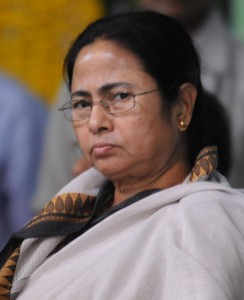
The report card is out.  Mamata Banerjee, the new love of Bengalis worldwide, is far more Left than the Left.   Mamata Banerjee is not only more Left, she is far less democratic than the communists of India.  She is autocratic, averse to criticism, and does not tolerate dissent.  It is unfortunate that Bengalis are now thrown from frying pan into fire.  But it is not just Bengalis who should be worried.  In fact, whole of India should be concerned.

What happens in Bengal could happen to India.   Bengal is the place where Great Britain installed their first capital city to create the Indian Empire.  Bengalis then led India into our own version of enlightenment, if there is one.   When most of us in the hinterland lands of India were still dwelling in forests, Bengalis were discussing Aristotle and Socrates.  The sun first shone in Bengal and then over the rest of India, literally and figuratively.  Bengalis were one of the forerunners of Indian National Movement contributing many great men and women to the cause.  During the 19th century, Bengal’s stars shone the brightest in the sky.  It produced many authors,  artists, and scientists.  Rabindranath Tagore won Asia’s first Nobel Prize. 

Segregation in India 2: Indian Muslims are not Khans or Kalams

India constantly refers to many Muslim Presidents they have had to showcase its tolerance and equal treatment of Muslims.  Nowadays many Indian Hindus repeatedly take the example of our erstwhile President, Abdul Kalam.  They say, ‘Look! We have had a Muslim as our President.  And he was selected by a Hindu Party!’ By saying this, they want to showcase India as a tolerant and magnanimous country that allows anyone to become the President of India, even a Muslim.  These Hindus also refer to the three Khans who dominate Indian Hindi Cinema – Shah Rukh Khan, Salman Khan and Amir Khan.  And they point out the cricketers like Yusuf Pathan and musician like AR Rahman.  They use these examples to say that Muslims are not discriminated in India, that they are not marginalized, that they get the same access to education and opportunity, that they are not unequal, that they are not second-class citizens. 

According to these Hindus, the Muslims are in fact ‘appeased’, they are given certain sops unnecessarily, like subsidies on Haj, and they are given special treatment unnecessarily, like special personal laws.  These people think that these ‘appeasing’ measures have a definite purpose - only to win votes.  They believe that Muslims are so naïve, so innocent that they could be beguiled by such silly sops, like Haj subsidy, to form a single vote bank.

Scrap Rajya Sabha

The recent jokes surrounding introduction of the film actress Rekha to Rajya Sabha thereby creating Silsila, an old Indian movie about a triangle love story right inside the Indian Parliament (because Jaya Bhacchan was already there), and then other debates on whether Sachin Tendulkar, the prominent cricket sportsman, should spend his time in Rajya Sabha instead of a cricket field throw open some hard questions on the relevance of Rajya Sabha. 

The debate is no longer about who should be allowed or what qualifications one needs to have to enter into Rajya Sabha.  The debate is far more fundamental.  Do we even need Rajya Sabha?

Saturday, March 24, 2012

Segregation in India: Plight of Muslims

After winning the American Civil War for Northern States, Abraham Lincoln went about abolishing slavery in United States of America.  The Congress and Senate passed three landmark amendments attempting to change the fate of African Americans in that country.  The 13th Amendment outlawed slavery, the 14th Amendment made blacks equal citizens, and 15th Amendment gave them right to vote.  In the next ten years of Reconstruction, many black leaders emerged to occupy positions in Senate and Congress.  It almost looked, for a while, that this new nation would correct the mistakes of its past and reverse the effects of slavery it imposed on black people.  However, the whites of America were not ready to give blacks an equal status in their country.  They started to dilute these amendments by creating a notion called ‘separate but equal’.  They imposed segregation in the country through a series of measures called Jim Crow laws. 

It started with disenfranchising many blacks, then creating separate schools, separate seating in travel and restaurants, thereby institutionalizing discrimination.  They created two Americas, one for the privileged which was mostly white, and the other was for the underprivileged which was mostly black.  The Jim Crow laws completely negated the three amendments passed during Lincoln’s times.

Sunday, August 28, 2011

Say No to Janlokpal Bill


While we can all celebrate the huge outpouring of the otherwise indifferent youth of India onto the streets triggered by Anna Hazare Movement, and become happy that this movement has singlehandedly woken up the apathetic Government of India to take up the battle against corruption quite seriously, let’s not go overboard and accept Janlokpal Bill.  The draft bill from these activists, the self-appointed guardians of Indian society, whose elitist speeches and attitudes find their way into the provisions of the bill, is as dangerous to India as the corruption itself, if not more.  In trying to fight one disease, let’s not install it with another.  If we adopt the bill imposed by these activists, we may be introducing a deadly cancer while attempting to fight the common cold.  

Thursday, August 25, 2011

The validity of Anna Hazare Movement

Why Anna Hazare Movement makes sense?

All of us who believe in a vibrant democracy should be happy with the current mass participation in the Anna Hazare Movement.  A democracy that whips up a public debate, which brings an all-pervading malaise into the foreground to make it topic of the day, making everyone in the country to sit up and take notice of an issue that concerns us all, definitely makes a healthy nation.  Anna Hazare Movement has singlehandedly challenged the Government of India, woke it up from its slumber – you could practically see our beloved Prime Minister waking up from his eternal nap to give a speech on the Independence Day. 

The Anna Hazare Movement has moved the current administration to sit up, shed its apathy towards corruption, and has created a sense of urgency to get the Lokpal Bill passed in the Parliament.  The subject got undivided attention even from the President of India who devoted some valuable time on the topic of corruption in her nationwide speech on the Independence Day.  Today the media consistently talks about corruption as if it is the newly discovered cancer.   Anna Hazare already got his victory when he mobilized thousands of youth across the country to come out and protest over a cause that is not entirely selfish.  Indian youth who do not pay much attention to the social and political issues have embraced this cause.  The movement gives the youth of the nation a motivation to participate in the political affairs of their country.  This is all for some good, one can hope.

Monday, August 15, 2011

India turns 64: Some notes

  • India and Pakistan got the status of Dominion within Commonwealth of Nations when they became independent.  India became Indian Union and Republic in 1950.  Pakistan became Islamic Republic in 1956.
  • India adopted a new constitution, world’s lengthiest, on 26 January 1950, the 20th anniversary of Lahore session’s Declaration of Independence of India.  It took 3 years to draft the document
  • India celebrates its Independence Day on 15th August, while Pakistan celebrates its on 14th August.  Lord Mountbatten unfurled Pakistan’s Flag in Karachi and then came to New Delhi that evening. 
  • Hindu astrologers did not accept 15th August since it was considered inauspicious – a compromise was struck by choosing the midnight hour.  Though secular in its constitutional framework, India remained Hindu in action.   On 15th August 1947, Nehru was crowned by Hindu Brahmins as is customary for kings and monarchs. 
  • Father of the Nation, Mohandas Karamchand Gandhi, referred to as the Mahatma, was on a fast on the Independence Day and was not present in New Delhi.  He was in Calcutta. He was sad that India got partitioned.
  • India made Lord Mountbatten its first Governor General.  ‘…few men in any country, cerntaily no foreign rulers, have been honored with such affection and respect’. Gandhi, Nehru and other prominent Congress leaders insisted on parting with Great Britain on good terms.  Jinnah appointed himself the Governor General of Pakistan. 
  • Jinnah died on 11th September 1948, about a year from the Independence Day.  He was suffering from tuberculosis which was a closely held secret known only to his sister and personal doctor.  They say history would have been different if his health condition was known to the public. 

Monday, August 08, 2011

Telangana 86: Democracy shuts its doors on Telangana

05 August 2011

Today, in a landmark speech, the Home Minister of Indian Union, P Chidambaram, set a new and dangerous precedent in the annals of Indian democracy.  His speech urged the two warring parties, the bully and the victim, to resolve the issue on their own and offered no intervention from the Government of India.  He said, quite emphatically, that it is not his ministry’s responsibility or the responsibility of the Government or the Parliament to intervene to resolve the issue of Telangana, and left the contentious issue of nearly sixty years to be resolved by the victims in Telangana by convincing the bullies of Seemandhra. 

This day marks a new chapter in the history of Independent India.  It deviates markedly from all earlier precedents where Union Government took the responsibility of resolving the regional disputes when they arose.  When Telanganas were being targeted by the Nizam’s forces the Government of India intervened by sending police to disarm Nizam and annex Hyderabad State into Dominion of India.  When Andhras of Madras State rose up in protest citing domination of Tamils, Nehru’s government intervened to create a new state for Andhras.  When Maharashtrians fought for a separate state, Article 3 was invoked to create two new states.  In numerous occasions, the Union Government and the courts of India intervened to settle the riparian disputes that arose between the states. 

Today, the Home Minister of India has abandoned such a practice and sought refuge in nonintervention, saying it is not their responsibility to provide a solution to a regional dispute.  The Government of India made it clear that they don’t have anything to do with the current dispute over formation of Telangana.  In essence, New Delhi orphaned Telangana without providing any recourse to justice.