Tuesday, November 20, 2012

Right to Offend

Download PDF

Facebook message on Bal Thackery


Yesterday, a 21-year old girl Shaheen Dhada, who put a message on her Face book ‘questioning the total shutdown’ of Mumbai city for Bal Thackeray’s funeral, and her friend Renu who ‘liked’ the message were arrested by the Maharashtra police.   The alleged message she posted was:

Everyday thousands of people die but still the world moves on.  Due to one political leader’s death, a natural death, everyone just goes bonkers.  They should know we are resilient by force not by choice.  When was the last time anyone showed some respect for Shahid Bhagat Singh, Azad or Sukhdeo.   Respect is earned, not given and definitely not forced… Today Mumbai shuts down due to fear, not respect.

The police arrested them under IPC Section 505 (2) which reads as:

Statements creating or promoting enmity, hatred or ill- will between classes
- shall be punished with imprisonment which may extend to three years, or with fine, or with both.

Of course, a mob of Shiv Sainiks then vandalized the girl’s uncle’s orthopedic hospital. 

Saturday, November 17, 2012

‘Meat eaters are bad people’

[In this article, the terms ‘meat-eaters’ and ‘non-vegetarians’ are used synonymously.  They are defined as the ones who eat mutton, chicken, fish, pork, beef, etc, at least once in a week or a month.] 


In India, there has always been long standing prejudice against meat-eaters.  The prejudice against meat-eaters emanates from India’s caste system, which is more deep rooted than any other identity, including, religion, language or region.   The dietary habits of Indians are strictly along the lines of a caste in each region.  Each caste in a region eats certain diet and it is common to everyone in that caste group in that region.  However, the same caste in a different region could have a different diet. 

For hundreds of years, people did not move out of the place they were born, and therefore the dietary habits were strictly honored along with caste system.  However, with the recent rapid urbanization of India, many people tend to live next door to complete strangers.  This trend has diluted this prejudice against meat-eaters to a great extent, but has not completely removed it.

Tuesday, November 13, 2012

Unraveling the ultimate question of ‘Life, Universe and Everything’


In the most imaginative and fantastic works ever created by a sentient being belonging to Homo Sapiens species, living on an ordinary planet, surrounding an average star, which lies on the outer arm of a common galaxy, called The Hitchhikers Guide to Galaxy, we find the answer to the Ultimate Question of Life, the Universe, and Everything. 

Rivaling the most profound statement ever made since Big Bang, in another fantastic fiction called The Bible, by an extremely interesting character called God who said ‘Let there be Light’, the Deep Thought computer created by the hyper-intelligent mice, after calculating for 7.5 million years, spells out the answer to the question of Life, Universe and Everything as a whole number ‘42’. 

Sunday, September 30, 2012

Telangana March Today

Telangana March is Today.  But the general feeling is palpable.  We are not living in a Democracy.  If anyone continues to believe there is democracy in Telangana then they are living in an illusion.   Seemandhra Government employs devious and dubious tactics to continue to suppress people of Telangana and its leadership with an iron hand.   On one side the Home Minister says there is permission for rallies, but the police officers are informed to disrupt any such activity, and if needed they are supposed to fire upon the people.  The police stations have been given orders to display posters such as below. 
The police are arresting thousands of activisits, including leaders and even MLAs.  All roads to Hyderabad are closed.  All railway services through the region are closed.  Nearly 50,000 armed forces are deployed to stop anyone from coming into Hyderabad.  Within Hyderabad, the city looks like a war-ridden Iraq.  Thousands of checkposts, police force harassing common people on the road.  

Got to know that city of Hyderabad is under Section 144 in perpetuity since 1969.  Whenever police wants to use brute force they can.   Imagine the kind of life we have been living in this armed rule.   When will Telangana be free?  When will we have democracy here in this region? 

Wednesday, September 19, 2012

India is not producing enough

Download PDF

Right now, Indian economy is going through a slump, and in the last few months we have seen Indian currency taking a massive hit reducing its value against dollar by nearly 20%.  The growth projections for India's GDP have come down from earlier eight-plus percentages to six-plus percentages – some analysts have even predicted only a five-plus growth rate.  Two months ago, petrol prices were hiked by eight rupees in a single day, the highest increase in Indian history, and already another hike is now announced.   There could be an economic crisis ahead, but we are quite optimistic that this phase will be over soon and that we will go back to getting adjusted to the new and changed environment – that’s the Indian attitude towards solving all the problems – swalpa adjust maadi (adjust a little).

Some analysts attribute this sudden worsening of Indian economy to Euro crisis, while some others blame the policy-paralysis of UPA government.  Many industry heads have been clamoring for Finance Minister of India to bring reforms hoping such an action will somehow bring India back on the track.  And the UPA government has recently reacted to allow FDI into some of the sectors, which is being greeted enthusiastically by the industry body.   But the essential question remains - is the root cause for our flailing economy the lack of reforms or is there something far more fundamental that needs to be corrected?  If we take a look at Indian economy from a macro level we will notice something grossly wrong with the big picture, with the way we are headed, with the way we do things.  There is something drastically wrong with our foundations.

The truth is - most Indians are not involved in producing goods of value.  Instead, most of us are involved in trading, buying and selling stuff without actually producing anything.  Since we are not producing enough as people, we are not earning enough as a country.

Monday, August 06, 2012

Why it is easy to molest a woman in India?

In the last few months, we have seen hundreds of incidents where a woman in India was molested, teased, sexually harassed, and stripped in public, sometimes in the view of cameras and bystanders.  One woman was thrown out of a moving train, another was attacked by acid, and others were physically molested.  

One of the immediate reactions from the media is that it is a 'law and order' problem. What they mean is that we don’t give strong punishment to the offenders, that the law is vague on these offences, or that the police officers are not very keen on registering the cases or following up on the case.  

I, on the other hand, don’t think 'law and order' is the main problem.  While 'law and order' is  one of the problems, it is not the primary one.  There are few countries, like Saudi Arabia, where the law is extremely strict, so much so that a convicted thief’s hand may be cut, and yet there is rampant mistreatment and abuse of women in that country. 

Also, I tend to think that most of these offenders, in countries like India, take a high moral ground because many people tend to sympathize with the offenders.  In the recent past, many administrative officers, police officers, organization heads and elected political leaders have all blamed the woman when such harassments happened.  They blamed the woman for inviting the man to molest her by dressing provocatively. 

Sunday, July 22, 2012

Bengal leads India into abyss

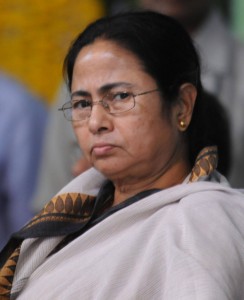
The report card is out.  Mamata Banerjee, the new love of Bengalis worldwide, is far more Left than the Left.   Mamata Banerjee is not only more Left, she is far less democratic than the communists of India.  She is autocratic, averse to criticism, and does not tolerate dissent.  It is unfortunate that Bengalis are now thrown from frying pan into fire.  But it is not just Bengalis who should be worried.  In fact, whole of India should be concerned.

What happens in Bengal could happen to India.   Bengal is the place where Great Britain installed their first capital city to create the Indian Empire.  Bengalis then led India into our own version of enlightenment, if there is one.   When most of us in the hinterland lands of India were still dwelling in forests, Bengalis were discussing Aristotle and Socrates.  The sun first shone in Bengal and then over the rest of India, literally and figuratively.  Bengalis were one of the forerunners of Indian National Movement contributing many great men and women to the cause.  During the 19th century, Bengal’s stars shone the brightest in the sky.  It produced many authors,  artists, and scientists.  Rabindranath Tagore won Asia’s first Nobel Prize. 

Segregation in India 2: Indian Muslims are not Khans or Kalams

India constantly refers to many Muslim Presidents they have had to showcase its tolerance and equal treatment of Muslims.  Nowadays many Indian Hindus repeatedly take the example of our erstwhile President, Abdul Kalam.  They say, ‘Look! We have had a Muslim as our President.  And he was selected by a Hindu Party!’ By saying this, they want to showcase India as a tolerant and magnanimous country that allows anyone to become the President of India, even a Muslim.  These Hindus also refer to the three Khans who dominate Indian Hindi Cinema – Shah Rukh Khan, Salman Khan and Amir Khan.  And they point out the cricketers like Yusuf Pathan and musician like AR Rahman.  They use these examples to say that Muslims are not discriminated in India, that they are not marginalized, that they get the same access to education and opportunity, that they are not unequal, that they are not second-class citizens. 

According to these Hindus, the Muslims are in fact ‘appeased’, they are given certain sops unnecessarily, like subsidies on Haj, and they are given special treatment unnecessarily, like special personal laws.  These people think that these ‘appeasing’ measures have a definite purpose - only to win votes.  They believe that Muslims are so naïve, so innocent that they could be beguiled by such silly sops, like Haj subsidy, to form a single vote bank.

Scrap Rajya Sabha

The recent jokes surrounding introduction of the film actress Rekha to Rajya Sabha thereby creating Silsila, an old Indian movie about a triangle love story right inside the Indian Parliament (because Jaya Bhacchan was already there), and then other debates on whether Sachin Tendulkar, the prominent cricket sportsman, should spend his time in Rajya Sabha instead of a cricket field throw open some hard questions on the relevance of Rajya Sabha. 

The debate is no longer about who should be allowed or what qualifications one needs to have to enter into Rajya Sabha.  The debate is far more fundamental.  Do we even need Rajya Sabha?

IITs: Islands of Excellence or Islands of Exclusiveness?

The recent debate on whether there should be a common entrance test for all engineering colleges in India or whether IITs should continue to maintain their own entrance test throws open various questions.  While IITs refuse to dilute their admission process maintaining that this process is the key to producing top class graduates, the government contends that too many entrance tests burden the students and therefore would like to include the class 12 scores in the admission process.

I, on the other hand, think that this debate calls for a completely new look at the admission process to all premier institutes in India, whether they are IITs, NITs, IIMs, or others.

In our attempt to create islands of excellence we have created an admission system called entrance tests.  Traditionally, in a country where people swore by their caste affiliations, where nepotism is a virtue, where entire social system was based on deep rooted discrimination, an entrance test which judged a person solely on the marks in an entrance test was greeted as a great achievement.  Because of its apparent benefits, it created a new class of society which now swears by the ‘merit’ system, a new system which measures people solely by one single attribute – marks obtained in one exam.  Now, each Indian is judged and measured by a number – called marks. 

Monday, April 16, 2012

Give me ignorance, it’s my birth right

In India, we have three major types of discrimination- that of caste, that of sex and that of religion, in the order specified.  Humans are discriminatory by nature- it’s in their predisposition to align themselves with a group to treat people of other groups with contempt, derision and fear.  Waging war, committing genocide, being xenophobic can be found in nature, even with some higher order mammals.  And human society is quite capable of justifying such behavior, sometimes glamorizing war against people of other kind, teaching them to be contemptible of other religions and caste, all in the name of fighting for your own kind.  

Either it is Nazism, or slavery in United States or caste system in India, they are all based in promotion of one’s own kind at the cost of other kind.  While it is easy to find fault with human gene for group discrimination, I am not sure if our disposition towards ill treatment of women is also genetic in nature or whether it comes wholly from religion and traditions.  Whether the roots lie in our animal ancestry or in our religion and traditions, it is generally agreed that most of these discriminations get their legitimacy from the way society influences its individuals.

Saturday, March 24, 2012

Segregation in India: Plight of Muslims

After winning the American Civil War for Northern States, Abraham Lincoln went about abolishing slavery in United States of America.  The Congress and Senate passed three landmark amendments attempting to change the fate of African Americans in that country.  The 13th Amendment outlawed slavery, the 14th Amendment made blacks equal citizens, and 15th Amendment gave them right to vote.  In the next ten years of Reconstruction, many black leaders emerged to occupy positions in Senate and Congress.  It almost looked, for a while, that this new nation would correct the mistakes of its past and reverse the effects of slavery it imposed on black people.  However, the whites of America were not ready to give blacks an equal status in their country.  They started to dilute these amendments by creating a notion called ‘separate but equal’.  They imposed segregation in the country through a series of measures called Jim Crow laws. 

It started with disenfranchising many blacks, then creating separate schools, separate seating in travel and restaurants, thereby institutionalizing discrimination.  They created two Americas, one for the privileged which was mostly white, and the other was for the underprivileged which was mostly black.  The Jim Crow laws completely negated the three amendments passed during Lincoln’s times.

Sunday, January 29, 2012

Distorted Article on Facebook about Social Democracy

There is an article circulating on Facebook about an Economics Professor and Social Democracy.  I am not even sure if the story is true, but it looks like it struck a chord with many netizens because its gets shared by so many.   This is how the story goes:

An economics professor at a local college made a statement that he had never failed a single student before, but had recently failed an entire class.  That class had insisted that Obama's socialism worked and that no one would be poor and no one would be rich, a great equalizer.

The professor then said, "OK, we will have an experiment in this class on Obama's plan". All grades will be averaged and everyone will receive the same grade so no one will fail and no one will receive an A... (substituting grades for dollars - something closer to home and more readily understood by all).

After the first test, the grades were averaged and everyone got a B. The students who studied hard were upset and the students who studied little were happy. As the second test rolled around, the students who studied little had studied even less and the ones who studied hard decided they wanted a free ride too so they studied little…

Saturday, January 28, 2012

Rushdie and Husain: Casualties of an Immature Democracy

Salman Rushdie is an Indian Muslim who was recently stopped from visiting India by those who claimed their ‘sentiments were hurt’.   Salman Rushdie was not allowed to attend the recent Jaipur Literary Festival because his book ‘Satanic Verses’ remains banned by the Government of India.  MF Husain was another Indian Muslim who was forced to leave India because another group claimed their ‘sentiments were hurt’.  Husain died in exile in Qatar pining for his home country.  An author and an artist are the casualties of an extremely immature and peevish democracy called India.   

In both the cases, the state, in the form of Indian Government, has succumbed to the mounting pressures from religious groups who claimed their sentiments were hurt by the actions of this author and the artist.  The weak state has allowed for suppression of expression of an artist and an author bowing down to the protests of ultra-sensitive groups.  As a result, the individual lost out to the power of a committed and bigoted group; and the state stood in support of the group and not the individual.  

Sunday, January 22, 2012

Rote Learning dumbs down Indians (Part I)

The last great invention or discovery made by Indians was zero.  After a spell of modicum greatness in the remote part of history where Indians contributed to mathematics, medicine, astronomy (don’t confuse this with astrology), we had a brief awakening movement in the first half of 20th century under British Empire when Indians earnestly took up European kind of education without feeling any remorse.  During this first half of the last century when British were still around, India produced some of the brilliant minds – CV Raman, Chandrasekhar, Rabindranath Tagore, and less known but most important of all, SN Bose (not your JC Bose).   After that brief awakening moment, we began to de-europeanize our education and started to Indianize it.  There began all the problems.

Before we could understand the true meaning of modern education, we started to demodernize it.  Going back to Indian methods meant learning by rote, repeating the arcane and tongue-twisting slokas forever and forever till you got the intonation right.  But did it mean you learnt anything? Not really.  This practice of learning by rote has been instilled into our education before we could really appreciate why we need to question or apply critical mind as a part of the process. 

What we got as a result is millions of robots who could just spew out tables up to 100, kids who answered quiz questions remembering completely irrelevant data and statistics like the exact date when Mt. Everest was scaled the first time, or the exact weight of a polar bear.   This rote learning has even helped Indian kids living in United States win Spelling Bee contests. And all through our school and college life, we revered and celebrated these memory machines.  What India was producing was all memory and no CPU. 

Mayawati and Made Snana

Mayawati, Elephants and Election Commission

Recently, the Election Commission in India took up a massive exercise to drape all the elephant statues erected by Mayawati because the symbol of BSP (Bahujan Samaj Party) happens to be an elephant.  The Chief Election Commission (CEC) justified this move as an appropriate step ‘to ensure the statues do not disturb the level playing field and give undue advantage to BSP’. 

While the erection of so many elephant statues by Mayawati is a silly act, draping them before elections by Election Commission makes it sillier.  Why draping these statues makes a silly exercise is very simple.  The symbol of Congress is an open palm.  Now, there are many deities in the country which show an open palm.  Would CEC give an order to drape all these deities or cover these open palms so that Congress does not get undue advantage?  Some of the political parties in India have cycles and cars as political symbol.  Would CEC give drape these vehicles?  What do we do if the symbol happens to be a tree? Would we cover every tree then? 

Saturday, January 21, 2012

Go back Rushdie, You are not welcome here


Dear Mr. Salman Rushdie:

You are not welcome in our country. 

Though we are the ‘greatest country’ with the ‘greatest culture’ we are an insecure lot.  Please don’t try to analyze why the greatest culture can be so insecure – you will not understand that.  In our country, most of the ‘greatest’ men and women happen to be extremely insecure.  They constantly pay their deities money and donations to keep their greatness intact.  If they do not pay obeisance to the gods or the godmen, they will lose that greatness instantly, thanks to the wrath of our unpredictable gods. 

Though we believe that our morals, dietary habits and family values are the 'greatest' on the planet, we also happen to be very peevish.  We tend to get hurt easily.  More than the people of this country, our religions, which have been in existence for hundreds of years, spreading and thriving, with more than billion followers around the world, get hurt far more easily.  Our greatest religions need constant protection from all those who criticize us, ridicule us, poke questions into our theories and mysteries. 

You don’t seem to understand the concept of ‘individual rights’ as it is interpreted in our country.  We have a right to believe in blind theories, gobbledygook stories, and mystical interpretations of the working of the nature.  We also have a right to apply these theories in our daily working, as a dam constructor or rocket scientist. And if for some reason, you seem to question them or speak against them, we have a right to threaten you, shut you up, and if needed, throw you in prison.

Monday, November 21, 2011

Run away from Indian Flag

Though Indians got their freedom on 15th August 1947, Indian Flag is still not free.  It is chained with sanctity, incarcerated by tradition, guarded zealously by peevish Indians whose only claim to greatness is their orthodoxy and antiquity.  Though Naveen Jindal fought to set Indian Flag free, allowing ordinary Indians to raise the flag, it still remains inaccessible to the common man.

After coming back from living abroad, it was my dream that one day I will keep the Indian flag high and big at my workplace.  Hearing that a common man can now raise the flag even at nights, we raised the Indian Flag on the 15th August and decided to keep it aloft on a tall mast for all times to come, brimming with pride.  That lasted just one day. 

The next day the police swooped onto us and asked us to remove it – they were not aware of the new flag code nor do they want to hear it from us.  When I checked the flag code and recent updates, it says that if you intend to keep it up in the night, then it should be ‘well-illuminated’.  Now, there enters the subjectivity – ‘well-illumination’.  What does that mean? The police, which was bent on denying this right to us, has an upper hand there.   Since he doesn’t want the flag up there, he does not agree that it is ‘well-illuminated’.  Try arguing with the local police what ‘well-illumination’ means. 

Wednesday, November 16, 2011

Wake Up, Telangana


We will not get Telangana.  We won’t get Telangana because we are not qualified to get Telangana.  No state will be given to those people who don’t even know how to fight for a separate state. 

Naïve Telangana

Telanganas can be generalized into a category called ‘naïve’.  Three hundred and fifty lakh naïve people are led by equally naïve leaders.  We believe in things too easily – sometimes bordering on foolishness.  Long ago we believed that Gentlemen’s Agreement will be honored.  It was not to be.  Time and again, we believed in various promises made by New Delhi.  They were not meant to be. 

For the last two years, we have been ‘manipulated and managed’ by the efficient political craftsmanship of New Delhi in cahoots with equally clever Seemandhra leadership.  Continuously and forever, we believe there will be decision made in the next few days.  Nothing happens. 

A committee after committee, a meeting after meeting, a consultation after consultation!  Our own leaders stand up on the podium to tell us that they have ‘information’ that a favorable announcement will be made in the next two days.  No such announcement comes.  We are told that we will get a decision after Srikrishna Committee Report, then after Assembly elections in four states, then after this festival, that festival and so on.  We fall prey to all their machinations hook, line and sinker.

Monday, October 31, 2011

Declaration of State of Telangana

The concepts of human rights, human dignity, self-rule and self-determination are quite modern.  Such concepts did not exist in the ancient world. Even if we were to find a glimpse of these concepts discussed in philosophies and texts of the ancients, we do not necessarily see its implementation as a comprehensive and extended practice to actually alter the lives of the people.

For thousands of years, man was born as a slave or subject and died as one.  Most of these slaves and subjects, sometimes even the landlords, did not possess any rights.  And the worst part is- most of them did not even realize that they possessed certain rights that are not necessarily ordained by their monarch.

Their assets, their property, their worth, their produce and even their self-respect, was up for grabs by their landlord, their king or an invading king or a marauding dacoit. Security was an expensive commodity.  The monarch provided meager security that was not even assured, and in return usurped all their rights. 

It took many centuries of struggle in certain parts of the world to come to a realization that man had certain ‘inalienable’ rights, which even the most powerful monarch could not take those away from him. 

Friday, October 28, 2011

I am the Movement...

[Original Contribution by Dileep Konatham].

As a Telanganite:
 
  • I will not lose my cool when someone talks negatively about Telangana Movement.
  • I will not get agitated by anti-Telangana "news" in the regional and national media.
  • I will not respond to foolish questions on why Telangana is needed.
  • I will not condemn my leadership on frivolous issues.  This will only dilute our cause.
  • I will not get swayed by anti-Telangana propaganda. 
  • I will not unnecessarily denounce my leadership in public. 
  • I will not lose heart when any of the agitations fail to attain Telangana.  I understand that an agitation is only a battle.  The war is won after many battles.
  • I will stand by the current Telangana leaders as long as they fight for Telangana.
  • I will strive to unite all Telangana forces to strengthen our movement.
  • I understand that Telangana is a just demand based on sound logic and facts.
  • I will approach my leadership and provide constructive feedback.
  • I will rise above caste and religion for Telangana.

Thursday, October 13, 2011

Andhra Pradesh is not a ‘marriage’

While describing the merger of Telangana and Andhra State in 1956 that resulted in formation of Andhra Pradesh, we tend to use metaphors like calling it ‘marriage of unequals’, or describing it as ‘an innocent girl married to naughty boy’.   Nehru purportedly said that this ‘marriage’ could be annulled through a ‘divorce’ at any point of time in future.   While such comparisons make poetic sense for the sake of driving a point, there is a danger when people start taking these analogies quite literally.   Right now, such comparisons are encouraging some Seemandhra politicians to seek alimony from Telangana or compensation from New Delhi for the loss of Hyderabad.  They should realize that any talks of compensation for the loss of Hyderabad as if it is ‘alimony’ will be quite disastrous for Seemandhras. 

When Gujaratis claimed Bombay because they had invested heavily into the city, no compensation was provided to Gujaratis for the loss when Bombay eventually became part of new Maharashtra.  No such compensation was given to Andhra State when Madras was retained by Tamil Nadu.  There was no discussion on ‘alimony’ because no one seriously considered them to be real marriages.  Back then, people were sensible enough to admit that such poetic references cannot be taken literally.

Thursday, September 01, 2011

It was Anna, not Janlokpal Bill

Arvind Kejriwal, one of the activists behind the Janlokpal Bill, in his interview to The Hindu said, “People wanted the JLB”. 

That is a patently wrong assumption to derive from the popular anti-corruption movement that we witnessed in India over the last few weeks.   Most people who showed up at the Anna Hazare Movement gatherings in various cities of India have not read Janlokpal Bill created by these activists.  They do not know that these activists are bent on pushing their version of the bill onto Indians riding the popular mood than sitting down to discuss and debate the issue with others.  Many Indians came to show their support to Anna Hazare who, according to them, is fighting the corruption in India.   These people wanted to express their solidarity with any anti-corruption campaign, not necessarily the Janlokpal Bill.   Kejriwal himself admits in the interview:

When we conducted referendums on the JLB, we used to try and explain its contents to people. But they said they did not want to understand the details. They just wanted to put a mohar [stamp] on Anna.

Kejriwal and his gang of activists are using Anna Hazare to promote their version of the bill which is not very different from the bill proposed by the Government, except that these activists want sweeping powers to one single body without any accountability.  If people were to read various versions of the bill, they would get confused because they all look very similar, except that the devil is in the details.  Looking at the bill proposed by the government, it seems as though Government of India is as keen as these activists to root out the corruption; so why all this hullabaloo and tamasha, one may ask?

Sunday, August 28, 2011

Say No to Janlokpal Bill


While we can all celebrate the huge outpouring of the otherwise indifferent youth of India onto the streets triggered by Anna Hazare Movement, and become happy that this movement has singlehandedly woken up the apathetic Government of India to take up the battle against corruption quite seriously, let’s not go overboard and accept Janlokpal Bill.  The draft bill from these activists, the self-appointed guardians of Indian society, whose elitist speeches and attitudes find their way into the provisions of the bill, is as dangerous to India as the corruption itself, if not more.  In trying to fight one disease, let’s not install it with another.  If we adopt the bill imposed by these activists, we may be introducing a deadly cancer while attempting to fight the common cold.  

Thursday, August 25, 2011

Anna is not India, India is not Anna

Kiran Bedi, one of the ubiquitous supporters of the current Anna Hazare Movement, in her overenthusiasm, said, ‘Anna is India. India is Anna’.  Little did she realize the significance of that statement!  Back in the heydays when Indira Gandhi was riding absolute power, her supporters chanted, ‘Indira is India. India is Indira’.  Now, we reflect upon that period as a national ignominy when she took over the country in an iron grip, imposed Emergency, stripped Indians of their rights, and put hundreds of her political opponents in jail.  To those who know history, such a chant from Kiran Bedi that ‘Anna is India’ reeks of ignorance or arrogance - both of which are quite dangerous given the popularity of the Anna Hazare Movement.

While discussing Arundhati Roy’s article (that appeared in The Hindu), I commented that it is a serious concern that the supporters of Janlokpal Bill do not include Dalits and Muslims.  If Anna Hazare has to make this an all-encompassing movement to be deemed ‘Indian’, he has to make sure these other groups support his cause, or be contended that he represents only a certain section of Indians.   A lady responded to my comment:
In what way does the Jan lokpall Bill not favor Dalits or Muslims? Do they not want a corruption-free govt?

The implicit assumption in the above question is: “If you are not with us then you are against us”, which seems to be the moot point of Arundhati Roy’s article against Anna Hazare Movement.   Many editors of the print media have openly disagreed with Janlokpal Bill.  Aruna Roy, a noted RTI activist, does not support Janlokpal Bill or the Anna Hazare Movement.  Can we conclude that these people do not stand for anti-corruption? 

The validity of Anna Hazare Movement

Why Anna Hazare Movement makes sense?

All of us who believe in a vibrant democracy should be happy with the current mass participation in the Anna Hazare Movement.  A democracy that whips up a public debate, which brings an all-pervading malaise into the foreground to make it topic of the day, making everyone in the country to sit up and take notice of an issue that concerns us all, definitely makes a healthy nation.  Anna Hazare Movement has singlehandedly challenged the Government of India, woke it up from its slumber – you could practically see our beloved Prime Minister waking up from his eternal nap to give a speech on the Independence Day. 

The Anna Hazare Movement has moved the current administration to sit up, shed its apathy towards corruption, and has created a sense of urgency to get the Lokpal Bill passed in the Parliament.  The subject got undivided attention even from the President of India who devoted some valuable time on the topic of corruption in her nationwide speech on the Independence Day.  Today the media consistently talks about corruption as if it is the newly discovered cancer.   Anna Hazare already got his victory when he mobilized thousands of youth across the country to come out and protest over a cause that is not entirely selfish.  Indian youth who do not pay much attention to the social and political issues have embraced this cause.  The movement gives the youth of the nation a motivation to participate in the political affairs of their country.  This is all for some good, one can hope.

Thursday, August 18, 2011

Our response to the ‘Response from CSDS’

You may want to look at our initial article, followed by response from CSDS.

[Reprint of the response to Yogendra Yadav of CSDS].

Looks like Yogendra Yadav and his CSDS is pulling a Manmohan on us.   When CSDS says: “Such an impression arises partly from a misreading of the survey findings,” we would like to point out that our objection to the survey is not just the results or its interpretations but the means and methods employed in the survey which according to us are clearly biased and fraudulent.  The question here is ethicality and validity of employing a person who has publicly professed his loyalties to a cause that is in essence anti-Telangana to conduct a survey within Telangana on an issue that dwells upon creation or non-creation of Telangana.  

The flimsy and intellectually dishonest response from CSDS tends to insult our intelligence.   We are not ready to buy their specious argument that: “Our survey clearly shows that within the Telangana region nearly two-thirds of those who have an opinion support a separate state.”  Our contention is that it is highly improbable that 27% of the people of Telangana would have no opinion on an all-pervading issue which affects them on a daily basis, especially when the figure for the same question is only 10% in Seemandhra where there are no on-going agitations as intensive as in Telangana.  It is like saying 27% Iraqis living in Iraq are either ignorant or carry no opinion on the subject of American invasion of Iraq, while only 10% are ignorant in the nearby Iran.  

Opinion Poll in Andhra Pradesh: Response from CSDS

CSDS has responded (Our allegations are at “Opinion Poll in Andhra Pradesh: Not funny anymore”).  The response is reprinted below.  CSDS has admitted to the following:
  1. CSDS employed P Narasimha Rao who is honorary convener of Samaikyandhra JAC. 
  2. Most of the investigators that went into Telangana are from Seemandhra.  
  3. It is ‘possibly an error of judgment’.  CSDS ‘would therefore carry out an independent verification of these survey findings and report the findings to the public within the next two months’.
 [Response from CSDS reprinted]

Clarification on Telangana related findings of the State of the Nation Survey by the CSDS

The publication of the findings pertaining to Telangana in the CNN-IBN State of the Nation Survey undertaken by the CSDS and presented by The Hindu has evoked strong interest and intense reactions, natural in a passionately contested issue like this one. We have been accused in some quarters of carrying out a flawed exercise biased against the movement for a separate Telangana.
 

Tuesday, August 16, 2011

Opinion Poll in Andhra Pradesh: Not funny anymore

By Sujai and Dileep

The Secret Chapter of Srikrishna Committee Report gave step-by-step instructions to subvert the genuine people’s movement of Telangana.  It advised the Government to use the media outfits to manipulate the news and opinion in order to suppress the movement in Telangana.

The recent survey from two national media outfits CNN-IBN and CNBC-TV18 in collaboration with Center for the Study of Developing Societies (CSDS) throws open the question if indeed there is anything called fair media in this country.

To the question asked: People have different opinions on the issue of a separate Telangana state.  Some people say that Andhra Pradesh should be bifurcated into Andhra Pradesh and Telangana, while State should be trifurcated into Andhra Pradesh, Telangana and Rayalaseema.  Others say that Andhra Pradesh should continue as a united State.  What is your opinion on the issue? 

Monday, August 15, 2011

India turns 64: Some notes

  • India and Pakistan got the status of Dominion within Commonwealth of Nations when they became independent.  India became Indian Union and Republic in 1950.  Pakistan became Islamic Republic in 1956.
  • India adopted a new constitution, world’s lengthiest, on 26 January 1950, the 20th anniversary of Lahore session’s Declaration of Independence of India.  It took 3 years to draft the document
  • India celebrates its Independence Day on 15th August, while Pakistan celebrates its on 14th August.  Lord Mountbatten unfurled Pakistan’s Flag in Karachi and then came to New Delhi that evening. 
  • Hindu astrologers did not accept 15th August since it was considered inauspicious – a compromise was struck by choosing the midnight hour.  Though secular in its constitutional framework, India remained Hindu in action.   On 15th August 1947, Nehru was crowned by Hindu Brahmins as is customary for kings and monarchs. 
  • Father of the Nation, Mohandas Karamchand Gandhi, referred to as the Mahatma, was on a fast on the Independence Day and was not present in New Delhi.  He was in Calcutta. He was sad that India got partitioned.
  • India made Lord Mountbatten its first Governor General.  ‘…few men in any country, cerntaily no foreign rulers, have been honored with such affection and respect’. Gandhi, Nehru and other prominent Congress leaders insisted on parting with Great Britain on good terms.  Jinnah appointed himself the Governor General of Pakistan. 
  • Jinnah died on 11th September 1948, about a year from the Independence Day.  He was suffering from tuberculosis which was a closely held secret known only to his sister and personal doctor.  They say history would have been different if his health condition was known to the public. 

Saturday, August 13, 2011

Why the issue of Reservations remains a contentious issue?

Times of India, in its editorial column, asks, ‘Why is reservation still such a contentious issue?’  The column is discussing the current debate arising out of Prakash Jha’ film Aarakshan, which was banned by three state governments – Uttar Pradesh, Punjab and Andhra Pradesh.   Instead of just laying out an opinion on the legality of the ban, the column goes onto discuss the issue of reservation.  It writes:

Have we failed to break out of the mindset favoring a divisive caste-based quota system?  Rather than forging unity, quotas today are a tool of vote-bank politics and a potential trigger of a social conflict.

The column expresses the same opinion which the most upper-caste and the elites hold in this country.  The topic of reservations remains a contentious issue, not because it is divisive or because it is a potential trigger of social conflict, but only because this topic is never discussed or taught in the right way in this country.  The debates that arise on TV shows are devoid of rationality, and instead it is full of bias and prejudice. 

Even the liberals amongst the upper caste and even the elite amongst the lower castes are squeamish when it comes to the topic of reservations. They continue to look at it as a tool that provides social crutch rather than social justice.  Reservation is seen as a system that introduces division rather than a system devised to bring equal opportunity.  Nobody bothers to ask why unity involves domination of one group of people over others? Reservation is seen as a trick employed by the politicians to secure vote-banks instead of being seen as the greatest and the most successful social experiment in the history of mankind that has emancipated hundreds of millions of lower classes out of subjugation in less than hundred years, overturning domination and discrimination that lasted nearly two thousand years. Most of the urban elite see reservations as anti-merit and anti-excellence system, while nobody bothers to point out that a society cannot strive for excellence without being inclusive.

Monday, August 08, 2011

Telangana 86: Democracy shuts its doors on Telangana

05 August 2011

Today, in a landmark speech, the Home Minister of Indian Union, P Chidambaram, set a new and dangerous precedent in the annals of Indian democracy.  His speech urged the two warring parties, the bully and the victim, to resolve the issue on their own and offered no intervention from the Government of India.  He said, quite emphatically, that it is not his ministry’s responsibility or the responsibility of the Government or the Parliament to intervene to resolve the issue of Telangana, and left the contentious issue of nearly sixty years to be resolved by the victims in Telangana by convincing the bullies of Seemandhra. 

This day marks a new chapter in the history of Independent India.  It deviates markedly from all earlier precedents where Union Government took the responsibility of resolving the regional disputes when they arose.  When Telanganas were being targeted by the Nizam’s forces the Government of India intervened by sending police to disarm Nizam and annex Hyderabad State into Dominion of India.  When Andhras of Madras State rose up in protest citing domination of Tamils, Nehru’s government intervened to create a new state for Andhras.  When Maharashtrians fought for a separate state, Article 3 was invoked to create two new states.  In numerous occasions, the Union Government and the courts of India intervened to settle the riparian disputes that arose between the states. 

Today, the Home Minister of India has abandoned such a practice and sought refuge in nonintervention, saying it is not their responsibility to provide a solution to a regional dispute.  The Government of India made it clear that they don’t have anything to do with the current dispute over formation of Telangana.  In essence, New Delhi orphaned Telangana without providing any recourse to justice.

Thursday, August 04, 2011

Telangana 85: Say NO to Telangana Talli

In our euphoria to restore our history and our identity we have been discarding everything that was imposed onto us in Andhra Pradesh by the Andhras.  One such idol we discard is the icon of Telugu Talli, an unmistakably Hindu lady with jewels and bhindi carrying Hindu symbol of devotion in one hand.  She looks no different from contemporary images of a Hindu goddess.  Telanganas replaced Telugu Talli with Telangana Talli, who doesn’t look any different from Telugu Talli except some small variations.  Once again she is distinctly Hindu lady.  Any casual observer will pass her for a Hindu goddess.  

Continuing the same exercise of discarding Seemandhra symbols, Telangana leaders are ready to discard the official state song Maa Telugu Talliki, which is a devotional song sung in most official programs, celebrations, government offices, schools, across the state.   The argument from Telanganas is the same – it is an imposition of Andhras onto Telanganas.